


Texas is an at-fault state
The driver who caused the crash, and that driver’s insurance company, is generally responsible for the damages. Fault is split into percentages: you still recover at 50% responsible, and nothing at 51% or more.
1-800-NO-FAULTCar accident · Austin, Texas
Tell us what happened. We handle the initial intake and pass your case on for legal review.
What happened?

First things first
Four things worth thirty seconds now that save a lot of confusion later.
The driver who caused the crash, and that driver’s insurance company, is generally responsible for the damages. Fault is split into percentages: you still recover at 50% responsible, and nothing at 51% or more.
It is the name of the network we work with. It is not a description of Texas insurance law, and it does not mean fault is irrelevant to your claim.
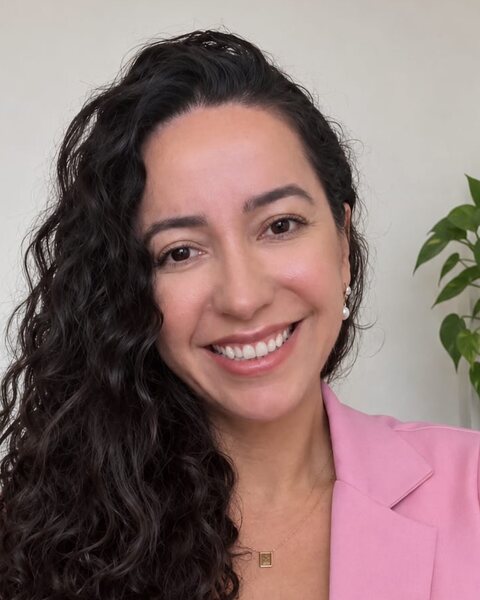
Dany Zumer is a case manager. She is not an attorney, does not practise law and does not evaluate your case. She listens to what happened, records it properly and passes it on.
Your information goes to a licensed Texas attorney, who decides independently whether they can take the case. If the answer is no, you have lost nothing.
Step one
Six quick questions, then how to reach you. Stop whenever you want.
Dany Zumer · case managerWe are collecting information, not evaluating your claim. Only a licensed attorney can do that.
The days after
Then the paperwork starts. These are the six things people tell us they were not ready for.
Appointments, imaging, physical therapy. Bills arrive long before anyone decides who pays them.
Repair estimates, storage fees, a rental you may or may not have coverage for, and a total-loss number you did not choose.
Shifts you cannot cover and appointments during working hours. Lost income is its own category of loss in Texas.
Adjusters from two insurers, a body shop, and sometimes a recorded-statement request within days.
Some injuries announce themselves at the scene. Others surface days later, which is why documentation matters.
Most people have never done this before and are guessing at every step. That is the part we can actually help with.
Please read
Dany Zumer is not an attorney and does not give legal advice.
Who answers
I am Dany Zumer. I am a case manager and intake coordinator. I am not an attorney, I do not practise law, and I cannot tell you what your case is worth or what you should do. Only a licensed attorney can do that.
What I do is straightforward: I listen to what happened, write it down properly, and pass it to a licensed Texas attorney who decides independently whether to take it. If the answer is no, you have still lost nothing.
General information
None of this is advice about your case. It is how auto claims are handled in Texas, so that nothing on that first phone call takes you by surprise.
An adjuster may ask to record you. You are generally not required to give a recorded statement to the other driver’s insurer. You can ask to schedule it later.
An offer can arrive before anyone knows how the injury resolves. In Texas, recovery for medical expenses is limited to what was actually paid or incurred.
Insurers routinely request medical authorizations. What you sign controls how much of your history they can reach.
Skid marks get washed away, vehicles get repaired or scrapped, and business security footage is often overwritten within days.
Texas generally allows two years from the date of the crash to file a personal injury suit. Claims against a city or other governmental unit have far shorter notice deadlines.
Texas assigns each party a percentage of responsibility. You can still recover if you are found 50% responsible, but not if you are found 51% or more.
General information
This is general information, not instructions for your situation. What applies to you depends on facts we do not know yet.
Move out of traffic if the vehicle can be moved and it is safe to do so. Hazard lights on.
Texas drivers must immediately report a crash involving injury, death, or a vehicle that cannot be driven away safely.
An investigating officer files a CR-3 crash report with TxDOT within ten days when there is injury or about $1,000 in damage. The old CR-2 blue form was discontinued in 2017.
Both vehicles, all four corners, the final resting positions, the road, signals, signage, debris, and the weather.
Name, phone, address, driver licence, licence plate, insurer and policy number, plus the vehicle owner if the driver does not own it.
A neutral witness can matter more than any other piece of evidence, and they leave the scene quickly.
Some injuries are not obvious for days. A medical record created close in time is also the record insurers take most seriously.
Bills, receipts, mileage, time off work, every letter. Signing a release or accepting a payment can end a claim permanently.
General information only. Requirements vary by state and by circumstance, and nothing here is legal advice. Texas reporting duties: Tex. Transp. Code §§ 550.026, 550.062.
Talk to us
We answer messages 24 hours a day and return phone calls between 8:00 a.m. and 9:00 p.m.

Interactive
Tick whatever you have. Nothing here is sent anywhere, and there is no right answer. It is a way to see what is worth gathering while it still exists.
Texas crash reports are available from the TxDOT Crash Records Information System for $6, or $8 certified, to anyone directly concerned in the crash (Tex. Transp. Code § 550.065).
Crash types
The type of crash changes which insurance responds and what has to be proven. A few things below are commonly stated incorrectly elsewhere.
Contrary to what is often written, Texas has no automatic presumption of fault in a rear-end crash. Negligence still has to be proven, which is exactly why the scene evidence matters.
Tell us about itHere Texas does have a statutory presumption in the traffic code: a driver required to stop and yield who is then involved in a collision is presumed not to have yielded. A jury still decides responsibility.
Tell us about itUsually the most severe, and often the ones where vehicle data recorders and physical evidence decide what actually happened.
Tell us about itFor an uninsured motorist claim against an unknown driver, Texas policies require actual physical contact. A near miss that runs you off the road is not enough.
Tell us about itTexas defines two on-app coverage tiers: $50k/$100k/$25k while logged on and waiting, and at least $1 million once a ride is accepted. Personal policies can exclude the whole thing.
Tell us about itA passenger who did nothing wrong is normally assigned no responsibility and may have a claim involving more than one driver.
Tell us about itRight-of-way rules turn on crosswalks, signals and where exactly the crossing happened, so the precise location matters a great deal.
Tell us about itInjuries tend to be more severe, and Texas helmet rules are more nuanced than the usual online summaries suggest.
Tell us about itInterstate carriers of property must carry at least $750,000 in federal minimum coverage, and carrier logs and data can be overwritten quickly.
Tell us about itStraight answers
No. Dany Zumer is a case manager and intake coordinator. She is not an attorney, does not practise law, and cannot give legal advice, legal opinions or legal representation. She collects your information and passes it to a licensed Texas attorney, who decides independently whether to take your case.
Nothing. We are paid by the law firm to advertise its services and to collect intake information. We are not paid out of anything you might recover, and what we are paid does not change based on what happens to your case.
Because it is a brand name, and it is a fair question. Texas is an at-fault state: the driver who caused the crash, and that driver’s insurer, is generally responsible for the damages.
The one Texas coverage that pays regardless of fault is Personal Injury Protection. Every Texas auto policy must include PIP unless the named insured rejected it in writing, and PIP benefits are payable without regard to who caused the crash. Texas does not require an insurer to provide PIP above $2,500, so that is usually the amount in play unless higher limits were bought (Tex. Ins. Code §§ 1952.151 through 1952.153).
In Texas the general limitations period for a personal injury suit is two years from the day the claim accrues (Tex. Civ. Prac. & Rem. Code § 16.003(a)). Some situations are shorter or longer. For a claim against a governmental unit the Texas Tort Claims Act requires notice within six months, and the City of Austin requires written notice within 45 days.
This is general information. Only an attorney reviewing your actual facts can tell you what deadline applies to you.
Possibly, and it is worth asking. Texas uses proportionate responsibility: damages are reduced by your percentage of responsibility, and you are barred only if you are found more than 50% responsible (Tex. Civ. Prac. & Rem. Code §§ 33.001, 33.012). People routinely assume they are at fault when the evidence says otherwise.
Texas insurers must offer uninsured and underinsured motorist coverage, and it applies unless a named insured rejected it in writing (Tex. Ins. Code § 1952.101). One detail catches people out: for a claim against an unknown hit-and-run driver, Texas policy forms require actual physical contact between the vehicles (§ 1952.104(3)).
You get a reference number on screen. We answer messages 24 hours a day and return phone calls between 8:00 a.m. and 9:00 p.m. We go through what happened with you, then pass your information to a licensed Texas attorney. If you contact us, your information may be provided to a lawyer at another law firm.
Sending the form does not hire anyone and does not create an attorney-client relationship. That begins only when you and a law firm sign a written agreement.
You are generally not required to give a recorded statement to another driver’s insurer, and you can ask to schedule any conversation for later. Beyond that general point we cannot advise you. What you should do about a specific request is a question for an attorney.
Yes. Atendimento em portugues. Atencion en espanol. The whole site, the form, and the conversation are available in all three languages.

Free, confidential, and no obligation. If a lawyer decides not to take your case, you have lost nothing but the time it took to tell us.
Before you go
Write down everything you remember about the crash while it is fresh, and photograph your vehicle before it is repaired. Both get harder every day that passes.